admin@sheriffhutton.n-yorks.sch.uk | tel. 01347 878441

At Sheriff Hutton Primary School, our curriculum is at the heart of everything we do. Alongside keeping children safe and supporting their wellbeing, we believe that providing an ambitious, engaging and purposeful curriculum is one of our most important responsibilities.
Our curriculum is designed to help every child ‘learn, grow and flourish’. We want our children to develop strong foundations in knowledge and skills, while becoming confident, curious and resilient learners who are ready for the next stage of their education and for life beyond school.
We provide memorable, thought-provoking learning experiences that connects learning across subjects and help children understand how their knowledge can be used in the real world.
Our curriculum is underpinned by three key questions:
We aim to provide a curriculum that:
Our curriculum is carefully sequenced so that children can ‘learn more, remember more and make meaningful connections’ between their learning.
Teachers use assessment effectively to understand what children already know, identify misconceptions and gaps, and plan the next steps in learning. We recognise that children learn at different rates and therefore adapt teaching carefully to ensure that all children can participate and succeed.
Our approach includes:
We value teachers as reflective professionals. Planning is not an end in itself; it is a tool to support effective teaching. Teachers continually assess, reflect and adapt their teaching in response to what children demonstrate they know, understand and can do.
By the time our children leave Sheriff Hutton Primary School, we want them to be:
Confident readers who read fluently, widely and for pleasure, and who can use reading as a tool for learning across the curriculum.
Resilient learners who understand that mistakes and challenge are part of learning and who have strategies to persevere when things are difficult.
Independent thinkers who can apply their knowledge, ask questions, solve problems and make connections between different areas of learning.
Successful learners who have developed the knowledge and skills they need to achieve well academically and are ready for the next stage of their education.
Healthy and safe individuals who understand how to look after their physical and mental wellbeing and know how to keep themselves safe, including when using technology and the internet.
Respectful and responsible citizens who value diversity, demonstrate kindness and respect, understand their responsibilities and recognise the importance of contributing positively to their community and wider society.
Curious lifelong learners who understand that learning does not stop when they leave the classroom and who have the confidence to explore, discover and develop their interests.
The National Curriculum provides the statutory framework for the knowledge and skills that children should be taught during their primary education.
At Sheriff Hutton Primary School, we teach the National Curriculum through a carefully sequenced programme of learning across the primary phase. This includes:
Alongside the National Curriculum, we provide high-quality teaching in Religious Education (RE) and Personal, Social, Health and Economic Education (PSHE). Our PSHE curriculum includes statutory relationships, health and relationships education, as well as wider learning about wellbeing, citizenship, safety and preparing for life in modern Britain.
Reading is central to our curriculum. We want every child to become a confident and enthusiastic reader who develops a lifelong love of books.
In the early stages of reading, children follow our systematic synthetic phonics programme, Little Wandle. Reading books are carefully matched to children’s developing phonics knowledge so that they can practise successfully and develop fluency and confidence.
As children become increasingly fluent readers, they are introduced to a wide range of high-quality texts, authors and genres. Reading is also an essential part of learning across the wider curriculum.
Assessment is an integral part of teaching and learning. Teachers continually assess children’s understanding through questioning, discussion, observation, classwork and other forms of assessment.
This information is used to:
At appropriate points, teachers also use summative assessments to review children’s attainment and progress. Assessment information is reviewed by teachers and subject leaders to ensure that our curriculum is meeting the needs of our children and to identify where further teaching or curriculum development may be needed.
Our curriculum is carefully mapped across each year group and subject to ensure that children encounter the essential knowledge, vocabulary and skills they need to succeed.
Subject leaders work with teachers to develop clear progression within their subjects. This enables children to revisit and deepen prior learning while progressively developing their subject-specific knowledge and skills.
Our whole-school curriculum overview provides an overview of the learning across Years 1–6. More detailed information about individual subjects, including progression and the knowledge and skills children will develop, can be found on our subject curriculum pages.
We also share curriculum information with parents throughout the year so that families can understand what children are learning and, where appropriate, support and extend learning at home.
We use a range of high-quality curriculum schemes and resources to support the planning and delivery of our curriculum. These provide teachers with carefully sequenced content, clear progression and a strong foundation from which to develop learning that meets the needs of our children.
Our schemes are not followed rigidly. Teachers use their professional knowledge and assessment of the children to adapt and enrich the materials, ensuring that learning is accessible, appropriately challenging and relevant to our school and community.
Examples of the schemes and resources we use include:
White Rose Maths – provides a carefully sequenced approach to mathematical learning, supporting children to develop fluency, reasoning and problem-solving skills. Teachers use the materials alongside practical resources and assessment to develop secure mathematical understanding.
The Literacy Tree – supports our English curriculum through high-quality, engaging texts. It provides a structured approach to developing reading, writing, vocabulary, grammar and spoken language, while giving children opportunities to write for a range of purposes and audiences.
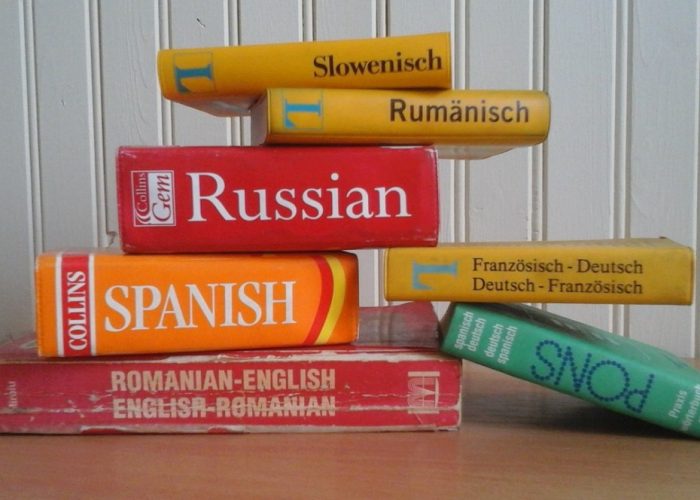
Kapow Primary – supports teaching in several foundation subjects, providing carefully sequenced units and progression in knowledge and skills. We use Kapow to support areas including Science, History, Geography, Design and Technology, Art and Design, Computing, French and PSHE, while adapting and supplementing the materials to reflect our curriculum priorities and the needs of our children.
Little Wandle Letters and Sounds Revised – provides our systematic synthetic phonics programme, ensuring that phonics teaching is consistent, carefully sequenced and matched to children’s developing reading skills.
Curriculum schemes are used alongside teacher expertise, assessment and other high-quality resources. They help us to ensure consistency, progression and coverage, while allowing teachers the flexibility to respond to the children in front of them.
We regularly review the effectiveness of our curriculum schemes and resources through assessment, pupil voice, monitoring and staff reflection. Where appropriate, we adapt, supplement or develop resources to ensure that our curriculum remains ambitious, engaging and relevant to our children.
Our curriculum is never considered ‘finished’. We regularly evaluate its effectiveness through assessment, pupil voice, staff reflection and subject leadership.
We consider what children know and remember, the experiences they have had and the progress they make. We use this information to refine and develop our curriculum so that it continues to meet the needs of our children and reflects the changing world in which they live.
At Sheriff Hutton Primary School, our ambition is simple: to give every child the knowledge, skills, experiences and confidence they need to succeed and to develop a lifelong love of learning.
Curriculum Statement – our detailed statement explaining the principles and development of our curriculum.
Whole-School Curriculum Overview– an overview of curriculum coverage across Years 1–6.
Our curriculum is regularly reviewed and updated to ensure that it remains ambitious, inclusive, purposeful and responsive to the needs of our children.
If you require further information about our curriculum please do not hesitate to get in touch using the ‘Contact us’ page.
We adapt our curriculum to suit the individual needs of all of our children. For further details please click on the following link to our SEND information.
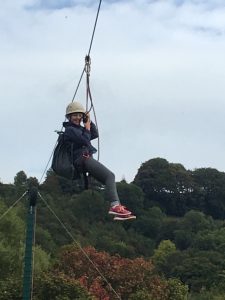
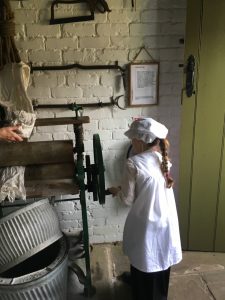
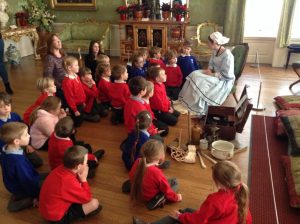
We believe that learning does not stop when children leave the classroom so we offer a range of opportunities across the school from a young age to maximise these valuable experiences and build independence and resilience.
School trips, visitors and residentials are also used to support learning within the classroom. They are an integral part of inspiring and engaging learning and can offer unique and memorable learning opportunities across the curriculum.
Please see our Educational Visits page for more details.











You must be logged in to post a comment.